
Are the Anunnaki in the bible?
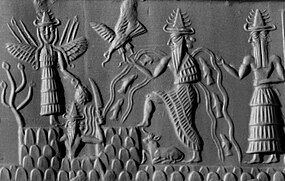
While the Anunnaki themselves are not explicitly named in the Bible, there are some interesting points of connection and overlap to consider:
- Similarities in Creation and Flood Narratives: Both Mesopotamian mythology (where the Anunnaki feature prominently) and the Bible contain stories of a great flood and the creation of humankind. This has led some to speculate that there might be a common source or influence for these narratives.
- The Nephilim: The Nephilim are a fascinating and mysterious group of beings mentioned in the Hebrew Bible. They appear in Genesis 6:4 and Numbers 13:33, and their identity and origins have been debated for centuries often described as giants or mighty warriors who were the offspring of “sons of God” and “daughters of men.” Some interpretations link these “sons of God” to fallen angels, which bears some resemblance to the Anunnaki being a group of deities. However, the exact nature and origin of the Nephilim is a matter of ongoing debate and interpretation.
- Here’s a breakdown of what we know (and what we don’t) about the Nephilim:
- What the Bible Says:
- Genesis 6:4: “The Nephilim were on the earth in those days—and also afterward—when the sons of God went in to the daughters of humans 1 and had children by them. They were the heroes of old, men of renown.” 1. missourireview.com missourireview.com
- Numbers 13:33: The Israelite spies sent to Canaan report seeing Nephilim there, describing them as giants so large that the spies felt like grasshoppers in comparison.
- Interpretations and Theories:
- Because the biblical descriptions are brief and somewhat ambiguous, there are several interpretations about who the Nephilim were:
- Fallen Angels: This is a popular interpretation, suggesting that the “sons of God” were angels who rebelled against God and mated with human women, producing giant offspring. This view is supported by some ancient Jewish texts like the Book of Enoch.
- Descendants of Seth: Another interpretation proposes that the “sons of God” were descendants of Seth, the righteous son of Adam, while the “daughters of humans” were descendants of Cain. The Nephilim, in this view, were simply humans who fell away from righteousness.
- Powerful Warriors: Some scholars believe the Nephilim were simply exceptionally strong and skilled warriors, and their “giant” stature may be metaphorical.
- Key Points of Debate:
- Identity of the “sons of God”: Whether they were angels, human descendants of Seth, or something else entirely.
- Nature of the Nephilim: Whether they were literal giants, exceptionally strong humans, or a combination of both.
- Their fate: Whether they were all destroyed in the Great Flood, or if some survived and continued to exist afterward.
- Significance:
- Despite the uncertainty surrounding their identity, the Nephilim have captured the imagination of many people throughout history. They represent the mysterious and unknown aspects of the ancient world, and their story raises questions about the nature of humanity, the relationship between the divine and the human, and the forces of good and evil.
- Important Note:
- It’s crucial to remember that these are interpretations of ancient texts, and there is no single, definitive answer about who the Nephilim were. The Bible itself provides limited information, and much of the speculation comes from later traditions and interpretations.
- Indirect Connections: Some scholars suggest that certain biblical figures or events might have connections to Mesopotamian deities or myths, although these connections are often debated and not definitively established.
Important Considerations:
- Different Contexts: It’s crucial to remember that the Bible and Mesopotamian mythology come from different cultural and religious contexts. They have different purposes and perspectives.
- Interpretation: Interpretations of both the Bible and ancient myths can vary widely. What one person sees as a clear connection, another might view as mere coincidence.
- Scholarly Debate: The relationship between biblical narratives and Mesopotamian mythology is a complex and ongoing topic of scholarly debate. There is no single, universally accepted answer.
In Conclusion:
The Anunnaki are not directly mentioned in the Bible. However, there are some intriguing similarities and potential connections between biblical stories and Mesopotamian myths, particularly regarding creation, the flood, and the Nephilim. Whether these are direct links, shared cultural influences, or simply coincidences remains a matter of interpretation and scholarly discussion.
 sabbathkeepersfellowship.com