This is a powerful and moving account of Perpetua’s martyrdom. Her story is one of incredible faith, defiance, and courage in the face of persecution. The fact that she left behind a firsthand account of her experiences makes her legacy even more profound—she wasn’t just a figure remembered through secondhand stories; her own voice has echoed through history.
It’s remarkable how her suffering not only strengthened the faith of those around her but also even converted her jailer. Her final words—urging unity and perseverance—make her a figure not just of sacrifice but of leadership.
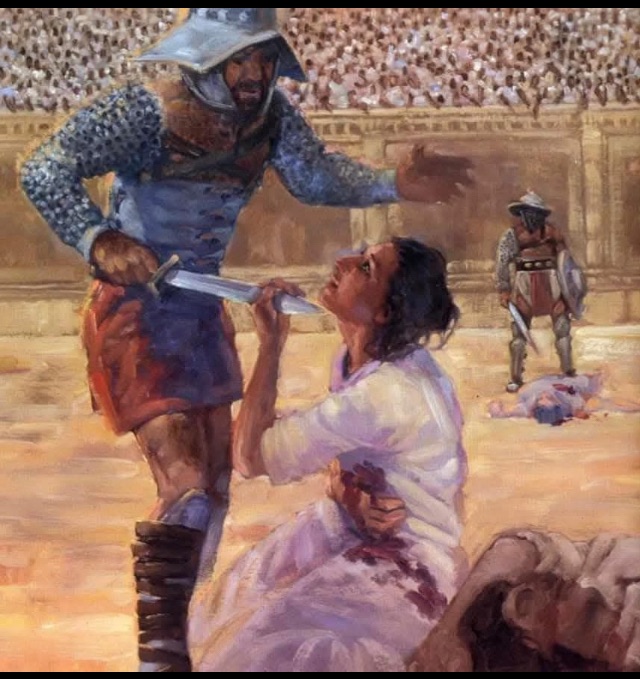
She walked into the Roman arena where the wild beasts awaited her. She trembled not from fear but from joy. Her name was Vibia Perpetua. She was just 22, a young mother singing hymns as the crowd jeered and a lion, leopard and wild cow encircled her.
One of the beasts attacked, hurling her to the ground. She covered an exposed thigh with her bloody robe to preserve her modesty and groped in the dust for her hair pin so she could fix her disheveled hair.
And when a Roman executioner approached Perpetua with a sword, her last words before collapsing were aimed at her Christian companions: “Stand fast in the faith, and love you all one another and do not let our sufferings be a stumbling block to you.”
History remembers Perpetua because she kept a diary during her imprisonment entitled “The Passion of Perpetua and Felicity” (Felicity was a pregnant slave girl arrested with Perpetua). Her diary is one of the rare and oldest-surviving documents written by a Christian woman. The emotion in the diary is almost unbearable. Perpetua describes the pain of leaving her infant son, who she was still nursing. She describes a prison visit from her weeping father, who kissed her hands while pleading with her to renounce her faith.
A narrator picks up the story in the diary after Perpetua was sent to her death. He wrote in the diary that Perpetua’s faith was so inspiring it caused the prison’s warden to convert. The narrator also describes Perpetua’s death. While she was imprisoned, Perpetua says God gave her visions to reassure her. After one, she wrote: “I understood that I should fight, not with beasts but against the devil.”
Numbers 5:11-31 describes a ritual for a woman suspected of adultery. In this ritual, the priest would mix holy water with dust from the tabernacle floor and the woman would drink it. This water is sometimes referred to as “bitter water” or “water of bitterness” in various translations. The text does not explicitly mention whether the woman is pregnant, but some interpretations suggest that the ritual could result in a miscarriage if the woman is guilty. However, other interpretations focus on the swelling of the abdomen and the wasting away of the thigh as signs of divine judgment, rather than a direct reference to abortion. Numbers 5:11-31 The Test for an Unfaithful Wife 11 Then the Lord said to Moses, 12 “Speak to the Israelites and say to them: ‘If a man’s wife goes astray and is unfaithful to him 13 so that another man has sexual relations with her, and this is hidden from her husband and her impurity is undetected (since there is no witness against her and she has not been caught in the act), 14 and if feelings of jealousy come over her husband and he suspects his wife and she is impure—or if he is jealous and suspects her even though she is not impure— 15 then he is to take his wife to the priest. He must also take an offering of a tenth of an ephah[a] of barley flour on her behalf. He must not pour olive oil on it or put incense on it, because it is a grain offering for jealousy, a reminder-offering to draw attention to wrongdoing.
16 “‘The priest shall bring her and have her stand before the Lord. 17 Then he shall take some holy water in a clay jar and put some dust from the tabernacle floor into the water. 18 After the priest has had the woman stand before the Lord, he shall loosen her hair and place in her hands the reminder-offering, the grain offering for jealousy, while he himself holds the bitter water that brings a curse. 19 Then the priest shall put the woman under oath and say to her, “If no other man has had sexual relations with you and you have not gone astray and become impure while married to your husband, may this bitter water that brings a curse not harm you. 20 But if you have gone astray while married to your husband and you have made yourself impure by having sexual relations with a man other than your husband”— 21 here the priest is to put the woman under this curse—“may the Lord cause you to become a curse[b] among your people when he makes your womb miscarry and your abdomen swell. 22 May this water that brings a curse enter your body so that your abdomen swells or your womb miscarries.”
“‘Then the woman is to say, “Amen. So be it.”
23 “‘The priest is to write these curses on a scroll and then wash them off into the bitter water. 24 He shall make the woman drink the bitter water that brings a curse, and this water that brings a curse and causes bitter suffering will enter her. 25 The priest is to take from her hands the grain offering for jealousy, wave it before the Lord and bring it to the altar. 26 The priest is then to take a handful of the grain offering as a memorial[c] offering and burn it on the altar; after that, he is to have the woman drink the water. 27 If she has made herself impure and been unfaithful to her husband, this will be the result: When she is made to drink the water that brings a curse and causes bitter suffering, it will enter her, her abdomen will swell and her womb will miscarry, and she will become a curse. 28 If, however, the woman has not made herself impure, but is clean, she will be cleared of guilt and will be able to have children.
29 “‘This, then, is the law of jealousy when a woman goes astray and makes herself impure while married to her husband, 30 or when feelings of jealousy come over a man because he suspects his wife. The priest is to have her stand before the Lord and is to apply this entire law to her. 31 The husband will be innocent of any wrongdoing, but the woman will bear the consequences of her sin.’”
National Library of Medicine • An abortion is a procedure to end a pregnancy. It can be done two different ways: Medication abortion, which uses medicines to end the pregnancy. It is sometimes called a “medical abortion” or “abortion with pills.” Procedural abortion, a procedure to remove the pregnancy from the uterus. It is sometimes called a “surgical abortion.”
In this video, we dive into the biblical perspective on abortion, addressing one of today’s most debated topics. Learn what the Bible teaches about the sanctity of life, God’s role in creation, and His thoughts on the value of unborn children. We’ll explore 7 key facts, including how God forms life in the womb and why every life is precious in His sight. Whether you are pro-life or seeking answers, this video provides a thorough, Bible-based approach to understanding abortion from a Christian worldview. 📖 Bible Verses Covered: Psalm 139:13-14, Jeremiah 1:4-5, Ezekiel 16:20-21, John 14:6, Deuteronomy 24:16, and more. 🙏 Remember: Choose life, and know that Jesus loves you. #BibleStudy#ProLife#AbortionDebate#ChristianPerspective#FaithAndLife#BiblicalTruth
#abortion: A general hashtag related to abortion
#prochoice: A hashtag that supports abortion rights
#prolife: A hashtag that opposes abortion rights
#antichoice: A hashtag that opposes abortion rights
#antilife: A hashtag that opposes abortion rights
#BansOffOurBodies: A hashtag that supports abortion rights and opposes abortion bans
#WhateverTheReason: A hashtag that supports abortion rights and opposes abortion bans
#abortionrights: A hashtag that supports abortion rights
#ShoutYourAbortion: A social media campaign that encourages women to speak out about their abortion decisions
The Bible addresses the issue of fathers provoking their children in a few key passages, most notably in Ephesians 6:4 and Colossians 3:21. These verses don’t explicitly define “provoking,” but we can understand it through the context and related concepts: Key Points:
Don’t exasperate or discourage: The core message is to avoid actions that frustrate, anger, or demoralize children. This can include:
Unreasonable expectations: Demanding too much or setting unrealistic standards.
Inconsistent discipline: Applying rules unfairly or unpredictably.
Harsh or abusive treatment: Yelling, belittling, or physically harming children.
Favoritism: Showing clear preference to one child over others.
Neglect: Ignoring their needs or failing to provide emotional support.
Focus on nurturing and instruction: The alternative to provoking is to raise children “in the nurture and admonition of the Lord” (Ephesians 6:4). This emphasizes:
Loving guidance: Providing support, care, and understanding.
Moral teaching: Instilling values and principles based on faith.
Discipline with love: Correcting behavior in a way that teaches and encourages growth, not crushes their spirit. Why is this important?
Children’s well-being: Provocation can lead to emotional damage, resentment, and rebellion in children.
Family harmony: It creates conflict and hinders healthy relationships within the family.
Spiritual development: Children who feel constantly criticized or discouraged may struggle to develop a positive view of God. It’s important to note:
This applies to both parents: While the verses specifically mention fathers, the principles apply to mothers as well. Both parents have a responsibility to create a nurturing environment for their children.
Children are not perfect: Children will make mistakes and need correction. The key is to do so in a way that is loving, patient, and focused on their growth. In essence, the Bible encourages parents to create a home environment where children feel loved, supported, and encouraged to grow into responsible and faithful individuals.
While the Bible doesn’t use hashtags, it does contain relevant verses about how parents should interact with their children. Here are some key themes and related verses:
Avoid provoking children to anger:
Ephesians 6:4: “Fathers, do not provoke your children to anger, but bring them up in the discipline and instruction of the Lord.”
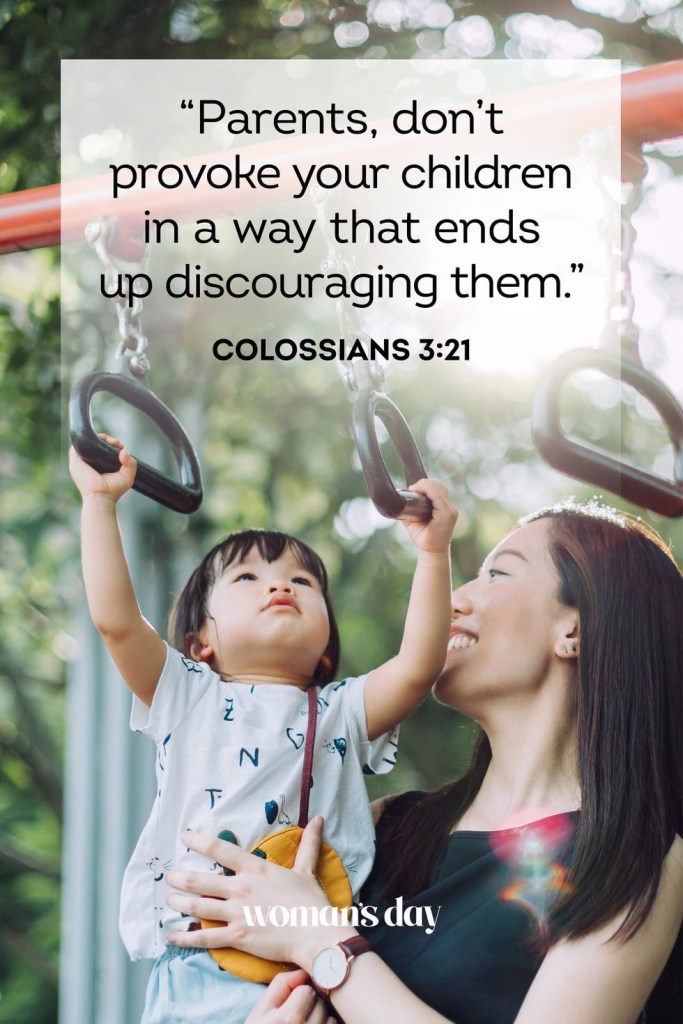
Colossians 3:21: “Fathers, do not embitter your children, or they will become discouraged.”
These verses emphasize the importance of creating a positive and supportive environment for children, avoiding actions that might lead to resentment or discouragement.
Discipline with love and instruction:
Proverbs 13:24: “Whoever spares the rod hates their children, but the one who loves their children is careful to discipline them.”
Proverbs 22:15: “Folly is bound up in the heart of a child, but the rod of discipline will drive it far from them.”
Hebrews 12:11: “No discipline seems pleasant at the time, but painful. Later on, however, it produces a harvest of righteousness and peace for those who have been trained by it.”
These verses highlight the need for discipline, but emphasize that it should be administered with love and aimed at instruction and correction, not out of anger or a desire to inflict pain.
Nurture and care:
1 Thessalonians 2:7: “But we were gentle among you, like a mother caring for her little children.”
This verse uses the analogy of a mother’s love to describe the kind of care and nurture that parents should provide. It’s important to note that interpretations of these verses can vary. Some emphasize the importance of firm discipline, while others focus on the need for gentleness and understanding. Ultimately, parents should strive to create a loving and supportive environment where their children can grow and thrive. If you’re interested in further exploring this topic, you can search for commentaries or articles on these specific verses or on the broader topic of parenting in the Bible.
You’re right to point out that the Bible doesn’t use tags in the way we do on social media! It’s a very different kind of text. However, we can still identify key themes and concepts related to provoking children, which function similarly to tags by helping us categorize and find relevant information. Here are some “tags” you might use to search for information on this topic in the Bible: Parenting: This is a broad tag that encompasses all aspects of raising children, including discipline, instruction, and emotional support. Discipline: This tag focuses on the methods parents use to correct and guide their children. It’s important to consider the Bible’s teachings on discipline in the context of avoiding provocation. Anger: This tag highlights the emotional aspect of the issue. The Bible warns against parents provoking their children to anger, so it’s important to understand what constitutes healthy vs. unhealthy anger in a child. Fathers: While the Bible often addresses fathers specifically, the principles generally apply to both parents. This tag can help you find verses that focus on the father’s role in the family. Children: This tag reminds us that children are individuals with their own needs and sensitivities. Parents should be mindful of how their actions affect their children. Instruction: This tag emphasizes the importance of teaching and guiding children in the way of the Lord. This should be done in a patient and loving manner, avoiding harshness that could lead to discouragement. Love: This is a fundamental principle in all aspects of parenting. The Bible emphasizes that discipline and guidance should be motivated by love for the child. By using these “tags” to search within the Bible or in biblical commentaries, you can find relevant verses and teachings on how to avoid provoking children and raise them in a loving and supportive environment.
The Bible places a strong emphasis on the importance of family and caring for its members. Here are some key themes and verses that highlight this:
Providing for Family:
1 Timothy 5:8: “But if anyone does not provide for his relatives, and especially for his own household, he has denied the faith and is worse than an unbeliever.” This verse emphasizes the responsibility to provide for the material needs of one’s family.
Honoring Parents:
Exodus 20:12: “Honor your father and your mother, so that you may live long in the land the Lord your God is giving you.” This commandment highlights the importance of respecting and caring for parents, especially in their old age.
Showing Love and Compassion:
Romans 12:10: “Be devoted to one another in love. Honor one another above yourselves.” This verse encourages showing love and care towards all family members.
Galatians 6:2: “Carry each other’s burdens, and in this way you will fulfill the law of Christ.” This verse emphasizes supporting family members in times of need and sharing their burdens.
Teaching and Guiding:
Proverbs 22:6: “Start children off on the way they should go, and even when they are old they will not turn from it.” This verse highlights the responsibility of parents to teach and guide their children in the ways of the Lord.
Maintaining Unity:
Colossians 3:14: “And over all these virtues put on love, which binds them all together in perfect unity.” This verse emphasizes the importance of love in maintaining unity within the family. Overall: The Bible teaches that family is a sacred institution and that caring for family members is a fundamental responsibility. This includes providing for their needs, honoring parents, showing love and compassion, teaching and guiding children, and maintaining unity within the family. It’s important to note that interpretations of these verses can vary, and different Christian denominations may have slightly different perspectives on the specific ways to apply these principles. However, the overall message is clear: caring for family is a vital aspect of Christian faith and practice.
: General Love & Support: #FamilyLoveInChrist #ServingFamilyTogether #BiblicalFamilySupport #LoveOneAnotherFamily Practical Help: #FamilyHelpingHands #SharingWithFamily #CaringForFamily #FamilyInNeed Unity & Harmony: #FamilyUnityInChrist #OneMindFamily #PrayingForFamily #FamilyHarmony A bit more poetic/evocative: #FamilyAsOne #StrongFamilyTree #RootedInFaithFamily Important Notes:



 sabbathkeepersfellowship.com